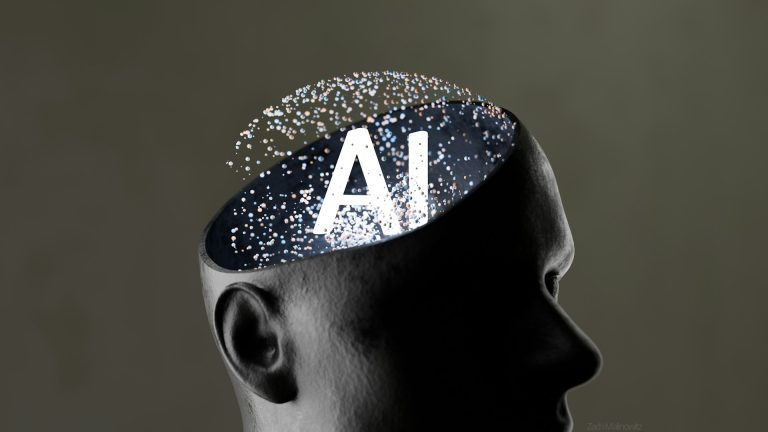
Artificial intelligence is no longer a distant concept, it’s embedded in how the tech industry operates today. Machine learning models surface product recommendations, generative AI drafts code and content, and neural networks power everything from fraud detection to medical imaging. As automation accelerates and AI technology takes on increasingly complex tasks, one question has become urgent for every tech professional: what can humans do that AI still cannot?
The answer is more substantial than most people expect. While AI tools are transforming workflows and eliminating certain repetitive tasks, they have not, and may never, replace the distinctly human capabilities that drive innovation, leadership, and long-term career success. For anyone exploring a career switch into technology, preparing for their first entry level IT job, or looking to future-proof an existing tech role, understanding these human skills is one of the most important investments you can make.
This guide explores the human skills that remain irreplaceable in an AI-driven tech industry, why they matter to employers, and how online learning and online education can help you develop them alongside the technical knowledge the job market demands.
It’s easy to feel intimidated watching AI capabilities expand at a rapid pace. Large language models write code. AI chatbots handle customer interactions. GitHub Copilot suggests entire functions as a developer types. IBM Watson assists with data analysis at a scale no individual professional could match. But here’s what the headlines frequently miss: artificial intelligence is a tool, a powerful one, and tools still require skilled humans to deploy, direct, and interpret them.
Employers across the tech industry consistently report that the professionals they most want to hire and promote are those who blend deep technical knowledge with human judgment that no AI system can replicate. They want people who ask the right questions, recognize when data is misleading, communicate across disciplines, and lead teams through ambiguity.
As online programs and online learning platforms continue to expand access to tech education, more professionals are investing in this dual development, because the future of the tech industry belongs to those who know how to work alongside artificial intelligence, not those who simply hope to be replaced by it.
Today’s AI systems are genuinely impressive. Machine learning algorithms detect patterns in datasets far too large for human analysts to process manually. Generative AI tools produce written content, design mockups, and functional code with minimal prompting. Computer vision applications identify objects, faces, and anomalies in images at speeds and scales no human team could match. Data analytics powered by AI models surfaces business insights in seconds rather than days.
In tech careers, this means AI applications are increasingly handling work that previously required hours of human effort, from writing boilerplate code to summarizing documentation to flagging security vulnerabilities. These AI capabilities are accelerating the pace of technical work, and skilled professionals who know how to leverage them effectively are more productive than ever before.
Despite this impressive range of AI capabilities, there are persistent and fundamental gaps. AI systems operate within the boundaries of their training data. They cannot genuinely understand context the way a human brain does. They lack moral reasoning, authentic empathy, and the ability to build real trust with other people. They cannot navigate the interpersonal complexity of a live team conflict, recognize when a technically correct answer is ethically wrong, or originate a truly novel idea rooted in lived human experience.
AI algorithms excel at optimizing for defined objectives, but they struggle when the objective itself needs to be questioned or redefined. That is where human intelligence takes over. And it is precisely in these gaps that the most durable, high-value tech skills live.
There is not one capability that artificial intelligence is failing to replicate, there is an entire landscape of human skills that collectively define what makes a tech professional irreplaceable. Understanding these skills, and actively developing them, is the key to thriving in any tech role for the long term.
Critical thinking is not just about finding answers, it’s about asking the right questions in the first place. In tech careers, that means knowing which problem is actually worth solving, how to frame it accurately, and whether a proposed solution addresses the root cause or only a surface symptom. It means recognizing when a dataset is misleading, when a machine learning model is producing biased outputs, or when a business analytics dashboard is telling only part of a story.
AI systems generate outputs based on patterns in their training data. They can identify correlations in data at extraordinary scale, but they cannot apply the kind of human judgment that evaluates whether the question was the right one to begin with. They cannot challenge the assumptions embedded in a project brief or recognize that a technically valid AI solution might cause unintended organizational harm.
This is why employers in the tech industry consistently rank problem solving and critical thinking at the top of their hiring criteria, especially for entry level IT job candidates who may not yet have deep professional experience but can demonstrate strong analytical reasoning.
Online students who practice these skills through project-based online programs build a competitive advantage that shows up throughout the job search process and well beyond. Critical thinking is not a trait you’re born with or without, it’s a capability that deepens through deliberate, guided practice.
Technical knowledge means very little if it can’t be communicated effectively. In modern tech roles, professionals collaborate across departments, explain complex AI systems and software development decisions to non-technical stakeholders, write documentation that others can actually use, and advocate for architectural or product choices in high-stakes meetings.
AI tools can draft text. They can summarize documents, generate reports from data, and produce written outputs at scale. But they cannot navigate the interpersonal dynamics of a real team conversation. They do not know how to adjust tone when a client is frustrated, deliver constructive feedback to a struggling colleague, or read the energy in a room and decide that a meeting needs to change course.
Effective communication is increasingly recognized as a career multiplier for professionals in tech roles. For online students pursuing entry level IT jobs, developing these skills alongside technical coursework through online learning creates an advantage that hiring managers notice immediately, in cover letters, interviews, and the first weeks on the job.
Innovation in tech is not simply a matter of optimization. Building something genuinely new, a product that changes behavior, a system that redefines an industry, a user experience that people immediately understand and love, requires imagination that no AI application currently possesses.
Generative AI tools are impressive at recombining existing patterns in new configurations. But they cannot originate ideas rooted in authentic human experience, cultural nuance, or emotional insight. The breakthroughs that shape technology emerge from human creativity: the ability to imagine what doesn’t yet exist and develop a path to building it.
For professionals in online programs focused on computer science, software development, UX design, or product management, creativity is not a supplementary trait, it’s a core professional asset. Employers across the tech industry seek candidates who bring not just technical execution but genuine inventive thinking. That’s a capability no AI model replicates.
Emotional intelligence, the capacity to recognize, understand, and manage emotions in yourself and others, is one of the most undervalued assets in the tech industry. Yet as teams grow more distributed, cross-functional, and globally diverse, its professional impact has never been more significant.
Tech roles increasingly require professionals to mentor junior colleagues, manage stakeholder relationships across organizations, and navigate high-pressure environments without losing sight of team morale and psychological safety. These are deeply human tasks that require empathy, self-awareness, and interpersonal sensitivity that even the most advanced AI agents cannot replicate.
No agentic AI can sense when a team member is quietly disengaging, mediate a heated disagreement between two senior engineers, or create the kind of trusted environment where people feel safe taking creative risks. For anyone in or entering the tech industry, developing emotional intelligence is not a soft investment, it’s a strategic one that directly shapes career trajectory.
Online learning environments that include group projects, peer feedback, and mentorship relationships give online students real opportunities to develop and practice emotional intelligence in professional contexts. Forward-thinking online education programs are increasingly building these experiences into the curriculum because they understand what the job market actually rewards.
The tech industry does not stand still. Machine learning frameworks evolve. Programming languages gain and lose prominence. New AI tools emerge and reshape entire workflows within months. The professionals who remain valuable over the long term are not those who master any specific technology, they are those who develop the capacity to learn continuously and adapt to whatever comes next.
Adaptability is a fundamentally human skill. It requires curiosity, resilience, and a growth mindset that AI systems are simply not capable of embodying. Algorithms improve through training data and parameter updates, they do not decide to grow, reinvent themselves, or choose to pursue new challenges. Humans do.
Online education has made this kind of ongoing learning more accessible than ever before. Online programs in computer science, cybersecurity, cloud computing, networking, and related fields allow working professionals to upskill without stepping away from existing careers, making online learning one of the most practical tools available for building long-term adaptability in a fast-moving field.
Human skills and technical expertise are not competing priorities, they amplify each other. A developer who writes excellent code and can clearly communicate its business value is more effective than one who can only do one or the other. An IT professional with deep technical knowledge and high emotional intelligence will advance further and lead more effectively than a peer who has only developed one dimension of professional capability.
For online students working toward entry level IT jobs or making a broader career switch into tech, this is an important reframe. Online programs that integrate both rigorous technical training and professional skill development are equipping graduates for the full reality of working in tech, not just the code and systems side of it.
The job search process in tech increasingly reflects this expectation. Hiring managers at leading companies report that they can teach technical skills far more readily than they can develop human judgment, emotional intelligence, or collaborative leadership in new hires. Candidates who arrive with both are the ones who move fastest and rise furthest.
Modern artificial intelligence technology is not a general-purpose intelligence. AI systems are trained on specific data to perform specific tasks. They do not have goals, values, or self-awareness. Understanding this distinction is itself a critical skill for tech professionals, because working effectively with AI tools requires knowing where they’re reliable and where human oversight is essential.
As AI advancements continue, the professionals who understand the actual capabilities and limitations of AI systems, rather than accepting media narratives at face value, will be the ones most equipped to use these tools responsibly and effectively. That judgment is a form of human intelligence that no algorithm can supply for itself.
Critical thinking, emotional intelligence, creativity, communication, and adaptability are not passing trends in the job market. They are enduring human capabilities that have always differentiated good professionals from exceptional ones. In an era of accelerating AI adoption, they have become more valuable, not less. Employers are not looking for professionals who can be replaced by an AI application, they are looking for professionals who can direct, evaluate, and improve AI systems while doing what AI cannot do at all.
For professionals considering a career switch or strengthening their foundation in tech, online education offers a flexible, high-quality path forward. Online programs in computer science and related fields provide the technical knowledge and real-world skills that employers value, while online learning environments increasingly incorporate collaboration, mentorship, and professional development that foster the human skills AI will never replicate.
Online students who invest in both dimensions are not just preparing for their first tech job. They are building careers designed to adapt, lead, and contribute meaningfully regardless of how artificial intelligence continues to evolve.
Conclusion
Artificial intelligence is one of the most powerful forces reshaping the tech industry, but it is not the whole story. The human skills that AI can’t replace in tech careers are not secondary concerns or nice-to-haves. They are the foundation of a sustainable, impactful, and resilient career in technology.
Whether you’re beginning your journey through online education, navigating a job search process, or growing into a senior tech role, investing in critical thinking, emotional intelligence, creativity, communication, and adaptability will pay dividends that no AI tool, AI system, or machine learning model can match.
The future belongs to professionals who bring what only humans can bring, and who are skilled enough to put AI to work in service of it.
401 Mile of Cars Way #100, National City, CA 91950
1717 Louisiana Blvd., NE., Suite 208 Albuquerque, NM, 87110
California Institute of Applied Technology participates in the State Authorization Reciprocity Agreements.
© 2026 California Institute of Applied Technology | info@ciat.edu | (877) 559 - 3621 | Privacy Policy
California Institute of Applied Technology has shared ownership and management of two distinct institutions. California Institute of Applied Technology located in California, and California Institute of Applied Technology located in New Mexico.
GI Bill® is a registered trademark of the U.S. Department of Veterans Affairs (VA). More information about education benefits offered by VA is available at the official U.S. government website at https://www.benefits.va.gov/gibill. CIAT is approved to offer VA benefits. Financial aid is available for those who qualify.
* Students are encouraged to take certification exams while actively enrolled in their Bootcamp, Certificate or Degree program. Unlimited certification exam attempts expire 180 days after program completion. Select exams are not eligible for unlimited retakes - see certification exam policy for details. Industry certifications and/or courses may change at any time to address industry trends or improve student outcomes.