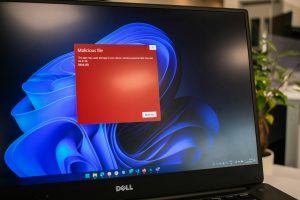
If you’ve been researching cybersecurity careers, you’ve probably run into the term “SOC analyst” more than once. It’s one of the most common entry-level job titles in the field and also one of the most misunderstood.
Here’s exactly what a SOC analyst does, what the job actually looks like day to day, what it pays in California and nationwide, and the most direct path to getting hired.
SOC stands for Security Operations Center. It’s the team and, often, the physical space within an organization responsible for monitoring, detecting, and responding to cybersecurity threats in real time.
Every organization that takes security seriously operates some version of a SOC. That includes Fortune 500 companies, federal agencies, hospitals, financial institutions, defense contractors, and cloud providers. Many smaller organizations outsource this function to a Managed Security Service Provider (MSSP), which hires its own SOC analysts.
A SOC analyst monitors an organization’s network, systems, and endpoints for signs of malicious activity. The job is fundamentally about three things: detect, analyze, and respond.
Most entry-level SOC analysts begin as Tier 1 analysts, the first responders who handle the initial triage of security events. With additional experience, analysts can advance to Tier 2 roles, where they conduct deeper investigations into threats. Senior analysts may eventually progress to Tier 3 positions, focusing on threat hunting and leading incident response efforts.
| Tier | Role | Focus | Experience Level |
| Tier 1 | Alert Triage Analyst | Monitor dashboards, first-pass triage | Entry-level (0–2 years) |
| Tier 2 | Incident Responder | Deep investigation, containment | Mid-level (2–4 years) |
| Tier 3 | Threat Hunter / IR Lead | Proactive hunting, forensics | Senior (4+ years) |
National average: $65,000–$90,000 for Tier 1
California average: $75,000–$105,000 (San Diego, LA, Bay Area)
Defense contractor SOC (with clearance): $90,000–$130,000+
Salary growth in SOC roles is primarily driven by certifications (CySA+, GCIH, GCIA), SIEM platform experience (Splunk, Microsoft Sentinel, IBM QRadar), and clearance status for those working in defense or government environments.
*Note: All salary data is sourced from salary.com
Entry-level SOC analysts are expected to be familiar with or quickly trainable on the following platforms:
You don’t need to be expert-level in all of these before your first job. Most employers expect foundational knowledge plus the ability to learn quickly in a structured environment.
These are the certifications most commonly listed in SOC analyst job postings:
See our full IT Certification Roadmap to see how these credentials stack in career progression.
You need a working understanding of networking (TCP/IP, DNS, HTTP, firewalls), operating systems (Windows and Linux basics), and security concepts (encryption, authentication, access control). CompTIA A+ and Network+ build this foundation.
Security+ is the single most requested certification in SOC job postings. It covers threat detection, incident response, cryptography, and network security — all directly applicable to Tier 1 SOC work. See our guide: How Long Does It Take to Get CompTIA Security+?
CySA+ (Cybersecurity Analyst) is the certification most directly aligned with SOC analyst responsibilities. It covers threat intelligence, vulnerability management, incident response, and SIEM usage. Candidates with both Security+ and CySA+ are significantly more competitive for analyst roles than those with Security+ alone.
Before your first interview, you want to demonstrate practical experience. Home lab environments (a VM running Kali Linux and a SIEM receiving logs from a practice network) or platforms like TryHackMe and Blue Team Labs Online provide real practice without an employer.
Employers want to see that you can think through a security event, not just list software. Frame your lab work as incidents: “Investigated a simulated phishing campaign using Splunk; isolated the affected endpoint and wrote an incident report.”
Yes, for most people entering cybersecurity, a Tier 1 SOC analyst role is the best available starting point. Here’s why:
The main challenge is alert fatigue; Tier 1 SOC work is high-volume and can feel repetitive. Analysts who advance quickly treat every alert as a learning opportunity rather than a task to close.
Not necessarily. Many employers accept equivalent certifications (Security+, CySA+) plus demonstrated lab experience in place of a formal degree for Tier 1 roles. That said, holding an accredited degree in IT or cybersecurity alongside your certifications makes you more competitive, especially for defense contractor and government roles that weigh formal education more heavily.
Possible, but increasingly difficult at competitive employers. Security+ opens the door; CySA+ gets you a seat at the table. If you only have time for one certification before job searching, make it Security+, but plan to add CySA+ within 6 months of starting your first role.
Most candidates reach Tier 1 readiness within 6–12 months of structured study. Students in CIAT’s cybersecurity program typically complete Security+, CySA+, and several additional certs as part of their degree, entering the job market with a stronger credential stack than most self-study candidates.
It can be. Alert volumes are high, shift work is common at 24/7 operations centers, and the stakes of missing a real threat are significant. Most analysts manage this through systematic triage workflows and good documentation habits. Burnout is a real issue in SOC environments. Organizations with structured escalation paths and reasonable analyst-to-alert ratios produce better outcomes for employees.
CIAT’s cybersecurity programs include Security+ and CySA+ prep with exam vouchers, plus career services support to help you land your first analyst role. Explore Cybersecurity Programs →
401 Mile of Cars Way #100, National City, CA 91950
1717 Louisiana Blvd., NE., Suite 208 Albuquerque, NM, 87110
California Institute of Applied Technology participates in the State Authorization Reciprocity Agreements.
© 2026 California Institute of Applied Technology | info@ciat.edu | (877) 559 - 3621 | Privacy Policy
California Institute of Applied Technology has shared ownership and management of two distinct institutions. California Institute of Applied Technology located in California, and California Institute of Applied Technology located in New Mexico.
GI Bill® is a registered trademark of the U.S. Department of Veterans Affairs (VA). More information about education benefits offered by VA is available at the official U.S. government website at https://www.benefits.va.gov/gibill. CIAT is approved to offer VA benefits. Financial aid is available for those who qualify.
* Students are encouraged to take certification exams while actively enrolled in their Bootcamp, Certificate or Degree program. Unlimited certification exam attempts expire 180 days after program completion. Select exams are not eligible for unlimited retakes - see certification exam policy for details. Industry certifications and/or courses may change at any time to address industry trends or improve student outcomes.